
English Texts A2-B1 | Pack 10

English Texts A2-B1

Everyday reading practice with short tests :
text + vocabulary + grammar/vocabulary tasks + comprehension questions

Pack 10: texts 91–100
A cold and cough

Text 91 — A Cold and Cough

Level: A2

Last week, I caught a cold. In the morning, I felt tired, and then I started to cough. My throat hurt, and I had a slight temperature. I didn't panic, but I decided to rest and take care of myself. I drank warm tea, took warm showers, and tried to sleep as much as I could. I also ate light food, like soup and fruit. When I felt a little better, I went for a short walk, but only for a few minutes. After a couple of days, the cough got weaker. I learned that simple care and rest are usually enough to help the body recover.

Vocabulary

  1. to catch a cold — простудиться
  2. to cough — кашлять
  3. a sore throat — боль в горле
  4. a slight temperature — небольшая температура
  5. to rest and take care of oneself — отдыхать и заботиться о себе
  6. warm tea — тёплый чай
  7. light food — лёгкая еда
  8. to help the body recover — помочь организму восстановиться

Exercise 1 — True or False

1.The writer caught a cold last week.
2.The writer had no throat pain.
3.The writer rested and drank warm tea.
4.The writer ate heavy food every day.
5.After a couple of days, the cough became weaker.

Exercise 2 — Answer the questions

  1. What symptoms did the writer have?
  2. What did the writer do to feel better?
  3. What changed after a couple of days?
  4. What lesson did the writer learn?

Going to the pharmacy

Text 92 — Going to the Pharmacy

Level: A2–B1

When I have symptoms like a sore throat or a cough, I usually go to the pharmacy. The last time, I went in the evening because I wanted to feel better by the next morning. Inside, I explained my problem to the pharmacist. I said that my throat hurt and that I'd been coughing. The pharmacist asked a few questions and recommended a couple of products. I chose throat tablets and also bought some vitamins. Before leaving, I checked the instructions and asked how often I should take the tablets. This way, I know I'm using the medicine safely.

Vocabulary

  1. a pharmacy — аптека
  2. a pharmacist — фармацевт
  3. to explain a problem — объяснять проблему
  4. to ask a few questions — задавать несколько вопросов
  5. to recommend — рекомендовать
  6. throat tablets — таблетки от горла
  7. to check the instructions — проверять инструкцию
  8. to use medicine safely — принимать лекарство безопасно

Exercise 1 — Choose the correct answer

1. The writer went to the pharmacy because...
a) they needed school books
b) they had a sore throat and cough
c) they wanted a new phone
2. The writer went to the pharmacy...
a) in the morning
b) in the evening
c) at night
3. The pharmacist asked...
a) a few questions about the symptoms
b) only about money
c) about travel plans
4. Before leaving, the writer checked the...
a) instructions
b) tickets
c) passwords

Exercise 2 — Answer the questions

  1. What symptoms did the writer explain?
  2. What did the pharmacist suggest?
  3. Why does the writer check the instructions?
  4. What did the writer buy besides throat tablets?
Visiting the dentist

Text 93 — Visiting the Dentist

Level: A2–B1

I don't like visiting the dentist, but I know it's important. Last month, I had pain in one tooth. I called the dental clinic and got an appointment two days later. At the clinic, the dentist examined my tooth and took a small X-ray. Then he explained what was wrong and suggested a treatment. The procedure wasn't pleasant, but it was quick. Afterwards, he gave me some advice: brush carefully, use mouthwash, and come back if the pain returns. I felt much better after the visit, and I decided to take better care of my teeth from now on.

Vocabulary

  1. a dentist — стоматолог
  2. a dental clinic — стоматологическая клиника
  3. to examine a tooth — осматривать зуб
  4. an X-ray — рентген
  5. a treatment — лечение
  6. to brush carefully — тщательно чистить зубы
  7. mouthwash — ополаскиватель для рта
  8. to take better care of one's teeth — лучше ухаживать за зубами

Exercise 1 — True or False

1.The writer had tooth pain last month.
2.The writer got an appointment the same day.
3.The dentist examined the tooth and took an X-ray.
4.The treatment took a very long time.
5.The dentist gave advice about dental care after the visit.

Exercise 2 — Answer the questions

  1. Why did the writer visit the dentist?
  2. What did the dentist do at the beginning?
  3. What advice did the dentist give?
  4. What did the writer decide after the visit?
Starting a healthier lifestyle

Text 94 — Starting a Healthier Lifestyle

Level: B1

I decided to start a healthier lifestyle because I wanted more energy during the day. I didn't change everything at once. Instead, I chose a few simple habits and tried to keep them for a month. First, I started drinking more water. Then I added more vegetables to my meals and cooked at home more often. I also tried to go for a walk every day, even if it was only fifteen minutes. At the weekend, I let myself sleep a little longer. After a few weeks, I noticed that I felt less tired and my mood had improved. Starting small made it much easier to keep going.

Vocabulary

  1. a healthier lifestyle — более здоровый образ жизни
  2. energy — энергия
  3. to drink more water — пить больше воды
  4. to add more vegetables — добавлять больше овощей
  5. to sleep a little longer — спать чуть дольше
  6. to feel less tired — чувствовать себя менее усталым
  7. starting small — начинать с малого
  8. to keep going — продолжать

Exercise 1 — Complete the sentences

energy month water fifteen tired
1. The writer wanted more during the day.
2. The writer tried to keep the habits for a .
3. First, the writer drank more .
4. The writer walked every day, even for just minutes.
5. After a few weeks, the writer felt less .

Exercise 2 — Answer the questions

  1. How did the writer start the healthier lifestyle?
  2. What three habits did the writer add?
  3. What changed after a few weeks?
  4. Why is starting small a good idea?
Going for a walk every day

Text 95 — Going for a Walk Every Day

Level: A2

Going for a daily walk has become my favourite habit. I started it because I wanted to move more and reduce stress. After I finish work or school, I put on comfortable shoes and head outside. Sometimes I walk near the river, and sometimes I go to a park. On good days, I walk for about forty minutes. On busy days, I only walk for fifteen minutes, but I still make the effort. When I walk, I don't check my phone too often. I listen to music or just enjoy the sounds around me. It helps me feel calm, and I sleep better at night too.

Vocabulary

  1. a daily walk — ежедневная прогулка
  2. to move more — двигаться больше
  3. to reduce stress — снижать стресс
  4. comfortable shoes — удобная обувь
  5. forty minutes — сорок минут
  6. to listen to music — слушать музыку
  7. to feel calm — чувствовать спокойствие
  8. to sleep better at night — лучше спать ночью

Exercise 1 — True or False

1.Walking every day is the writer's favourite habit.
2.On busy days, the writer doesn't walk at all.
3.On good days, the walk is about forty minutes.
4.The writer checks the phone a lot during walks.
5.Walking helps the writer sleep better at night.

Exercise 2 — Answer the questions

  1. Why did the writer start walking every day?
  2. Where does the writer walk?
  3. What does the writer do instead of checking the phone?
  4. How does walking help the writer?
Doing exercise at home

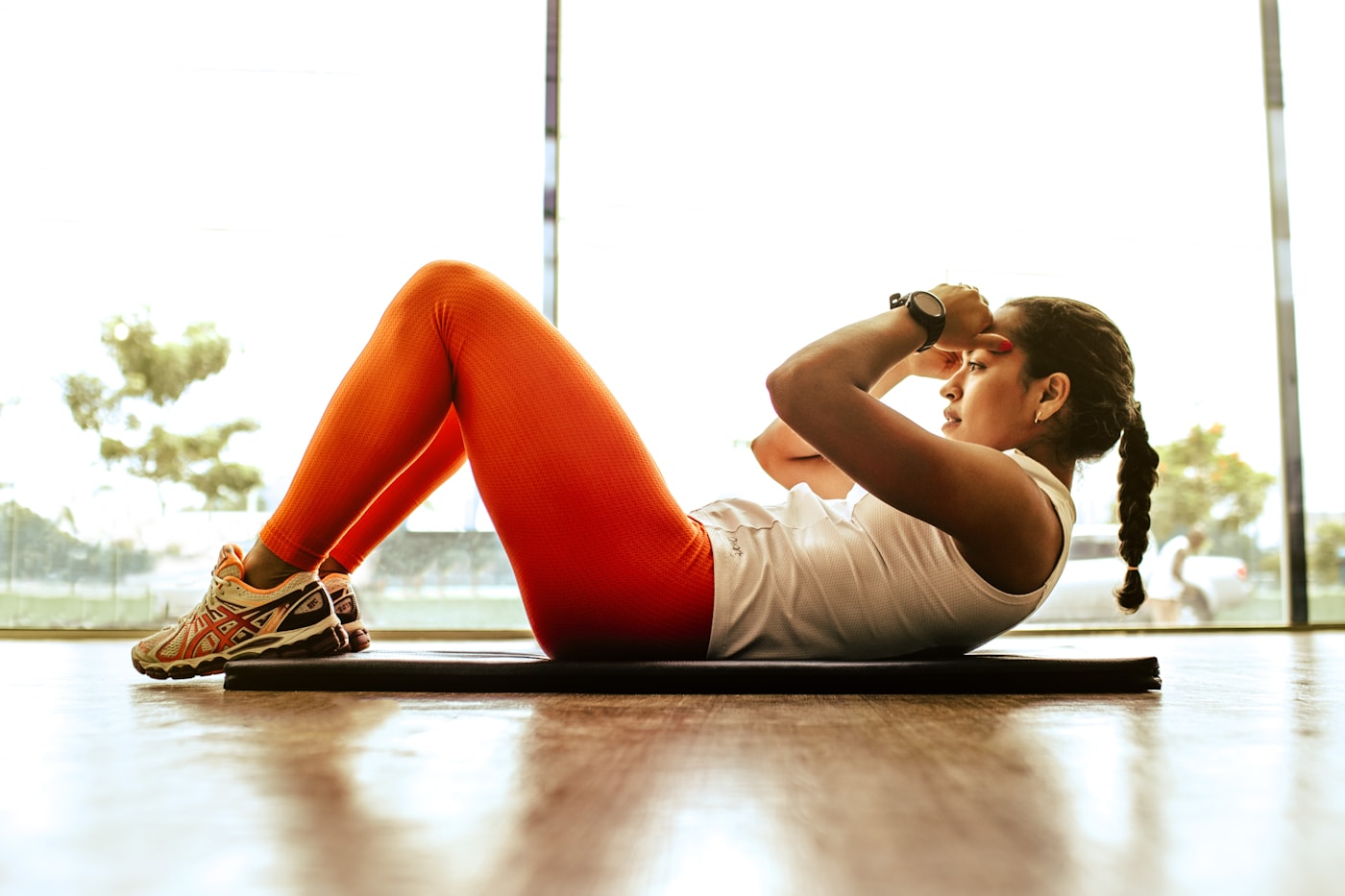
Text 96 — Doing Exercise at Home

Level: A2–B1

I exercise at home because it's easy and I don't need any special equipment. I usually work out three or four times a week in the evening. I start by warming up for a few minutes and then follow a short routine. My routine includes simple exercises like stretching, squats, and light cardio. I follow a video from the internet, but I only choose programs for beginners. I also make sure to drink water afterwards. In the beginning, I got tired quickly, but now I can finish the whole routine without stopping. Exercise helps me feel stronger and sleep better.

Vocabulary

  1. special equipment — специальное оборудование
  2. to warm up — разминаться
  3. stretching — растяжка
  4. squats — приседания
  5. light cardio — лёгкое кардио
  6. beginners — начинающие
  7. the whole routine — весь комплекс упражнений
  8. to feel stronger — чувствовать себя сильнее

Exercise 1 — Complete the sentences

easy week squats beginners stronger
1. The writer exercises at home because it is .
2. The writer works out three or four times a .
3. The routine includes stretching, , and light cardio.
4. The writer only chooses videos for .
5. Exercise helps the writer feel .

Exercise 2 — Answer the questions

  1. What exercises does the writer do at home?
  2. How does the writer choose videos?
  3. How did the writer feel in the beginning compared to now?
  4. What two benefits does exercise give the writer?
Joining a gym

Text 97 — Joining a Gym

Level: A2–B1

I joined a gym last month because I wanted more motivation to exercise. At home, it was too easy to stop when I got tired. In the gym, I can use different equipment and also talk to trainers for advice. On my first day, I asked a trainer for help. He showed me how to use the machines safely and helped me choose a simple training plan. Now I go twice a week. I also try to walk more on the other days. After each workout, I feel relaxed and proud of myself. Joining a gym has made it easier to stick with exercise and believe that I can improve.

Vocabulary

  1. a gym — тренажёрный зал
  2. motivation to exercise — мотивация заниматься спортом
  3. different equipment — различное оборудование
  4. a trainer — тренер
  5. to use the machines safely — безопасно использовать тренажёры
  6. a training plan — план тренировок
  7. a workout — тренировка
  8. to stick with exercise — придерживаться тренировок

Exercise 1 — True or False

1.The writer joined the gym last month.
2.At home, the writer always trained without stopping.
3.A trainer helped the writer on the first day.
4.Now the writer goes to the gym five times a week.
5.The writer feels proud after each workout.

Exercise 2 — Answer the questions

  1. Why did the writer join the gym?
  2. What did the trainer help with on the first day?
  3. How often does the writer go to the gym now?
  4. How has joining the gym helped?
Sleeping well

Text 98 — Sleeping Well

Level: A2

Sleeping well is very important to me. When I get enough sleep, I feel calmer and I can study better. If I sleep badly, I get tired quickly and it's harder to concentrate. To sleep better, I follow a simple bedtime routine. I turn off my phone about thirty minutes before bed. Then I brush my teeth, wash my face, and get my clothes ready for the next morning. I also open the window for a few minutes to let in some fresh air. These small habits help me fall asleep faster. When I sleep well, the next day always feels easier.

Vocabulary

  1. to feel calmer — чувствовать себя спокойнее
  2. a bedtime routine — ритуал перед сном
  3. to turn off the phone — выключать телефон
  4. to brush one's teeth — чистить зубы
  5. to open the window — открывать окно
  6. to fall asleep faster — засыпать быстрее
  7. to study better — учиться лучше
  8. thirty minutes — тридцать минут

Exercise 1 — Choose the correct answer

1. Sleeping well helps the writer...
a) feel calmer and study better
b) stop eating
c) forget everything
2. The writer turns off the phone...
a) at night when sleeping
b) thirty minutes before bed
c) in the morning
3. The writer opens the window to...
a) let in fresh air
b) hear the street noise
c) cool down the room
4. These habits help the writer...
a) wake up earlier
b) fall asleep faster
c) dream more

Exercise 2 — Answer the questions

  1. Why does sleeping well matter to the writer?
  2. What does the writer do before sleep?
  3. How do these habits help?
  4. How does the writer feel the day after a good sleep?
Reducing screen time

Text 99 — Reducing Screen Time

Level: A2–B1

I spend a lot of time on my phone, and sometimes it's too much. When I use screens late at night, I feel wide awake and it's harder to fall asleep. That's why I decided to reduce my screen time. Now I have a simple rule: no social media after 10:30. Instead, I read a page or two of a book or listen to calm music. During the day, I also try to take regular breaks from my phone. For example, after I reply to messages, I stand up and get a glass of water. This helps my eyes and gives my mind a rest. Reducing screen time has made me feel healthier overall.

Vocabulary

  1. late at night — поздно ночью
  2. to reduce screen time — сокращать время у экрана
  3. social media — социальные сети
  4. calm music — спокойная музыка
  5. regular breaks — регулярные перерывы
  6. eyes — глаза
  7. to feel healthier — чувствовать себя здоровее
  8. overall — в целом

Exercise 1 — True or False

1.The writer uses screens too much at night.
2.After 10:30, the writer still scrolls social media.
3.The writer reads or listens to calm music after 10:30.
4.The writer never takes breaks from the phone during the day.
5.Reducing screen time makes the writer feel healthier.

Exercise 2 — Answer the questions

  1. Why did the writer decide to reduce screen time?
  2. What does the writer do instead of social media after 10:30?
  3. What break does the writer take during the day?
  4. How does reducing screen time help the writer?
Taking care of mental health

Text 100 — Taking Care of Mental Health

Level: B1

Mental health is important, and I try to look after mine every day. Sometimes I feel stressed, especially when I have a lot of tasks. When that happens, I stop for a moment and breathe slowly. I also write down what I need to do, because getting my thoughts on paper makes them clearer. Another habit that helps is talking to people I trust. If I feel worried, I send a message to a friend or ask my family for advice. I also try to do something relaxing, like listening to music, going for a walk, or reading. These simple things don't solve everything, but they help me feel better and keep moving forward. Looking after your mental health is something you do every day, not just when things go wrong.

Vocabulary

  1. mental health — психическое здоровье
  2. to feel stressed — чувствовать стресс
  3. to breathe slowly — дышать медленно
  4. to write down thoughts — записывать мысли
  5. to talk to people you trust — говорить с людьми, которым доверяешь
  6. something relaxing — что-то расслабляющее
  7. to keep moving forward — продолжать двигаться вперёд
  8. to look after one's mental health — заботиться о психическом здоровье

Exercise 1 — Choose the correct answer

1. The writer gets stressed when there are...
a) a lot of tasks
b) no tasks at all
c) good weather
2. When stressed, the writer breathes slowly and...
a) goes to sleep
b) writes down what needs to be done
c) calls an ambulance
3. When feeling worried, the writer talks to...
a) strangers online
b) friends or family
c) nobody
4. Relaxing activities include music, a walk, and...
a) cooking
b) reading
c) working more

Exercise 2 — Answer the questions

  1. What does the writer do when thoughts feel confusing?
  2. Who does the writer talk to when feeling worried?
  3. Why are these simple habits useful even if they don't solve everything?
  4. According to the writer, when should you look after your mental health?
English Texts A2-B1 — Pack 10 — Everyday Topics 91–100